

Your toothbrush charger sits on the counter day and night. That little plastic puck pulls a small alternating current through it, hour after hour, and if you've ever put a cheap magnetometer app on your phone and waved it over one, you've seen the needle jump. Mine did—about 12 microtesla at two centimeters, dropping to noise level by the time I moved the phone six inches away. That's the whole story in miniature: yes, there's a field, no, it isn't a big one, and yes, the design of the charger still matters.
I've bought five electric toothbrushes in the past four years, returned two, and spent an embarrassing amount of one winter reading charger spec sheets because I was curious whether the "EMF-safe" labeling on a couple of products was anything more than marketing. Here's what I learned about choosing an EMF-safe electric toothbrush charger—what actually reduces exposure, what doesn't, and where the real trade-offs sit.
Key Takeaways
- Electric toothbrushes do emit EMF, but the field is localized and falls off sharply with distance—think inches, not feet.
- Inductive (contactless) chargers produce a near-field magnetic field around the coil; contact-pin chargers produce less continuous emission when idle.
- Distance is the single biggest lever: moving the charger from your nightstand to the bathroom shelf matters more than any spec.
- Continuous overnight charging isn't dangerous, but a charger that cuts off current when the brush is topped up is a nicer choice.
- Certification (CE, FCC, UL) tells you the device meets basic electrical safety—it doesn't mean "zero EMF," and no charger can claim that honestly.
Do electric toothbrushes emit EMF?
Yes. Any device with a current-carrying coil or motor produces an electromagnetic field, and an electric toothbrush has both. The question worth asking is how much, and where.
The actual field strength, in practical terms
The field you feel worried about is the low-frequency magnetic field around the charging base—the part that's always plugged in. When the brush is running, the motor in the handle generates its own small field, but it only exists while you're brushing, and it's inside a sealed plastic case inches from your hand for two minutes. The charger is the piece that lives on your counter indefinitely, and that's where I'd focus if I were optimizing.
What I measured on a handful of units with a smartphone magnetometer (not lab-grade, but directionally useful):
- 1 cm from an active inductive base: roughly 8–20 µT depending on the model
- 5 cm away: typically under 3 µT
- 15 cm away: indistinguishable from background in most rooms
For context, the earth's static magnetic field is around 50 µT. These are alternating fields, not the same thing, so don't read that as "harmless because earth"—but the orders of magnitude should put the worry in proportion. The relevant exposure guidelines for everyday public exposure sit far above what a toothbrush charger produces at any normal distance.
Why the coil design matters
Contactless chargers work by induction: a coil in the base drives a coil in the handle. That transfer only happens while the brush sits on the base, so the field lives in the air gap between them. Contact-pin chargers form a direct circuit and typically emit far less continuously—when the brush is fully charged, the current drops to a trickle or zero.
How to choose an EMF-safe electric toothbrush charger
There's no "EMF-free" option on the market, and any listing that claims it is selling you a feeling, not a measurement. What you can do is pick a charger whose design keeps the field small, localized, and only present when it needs to be.
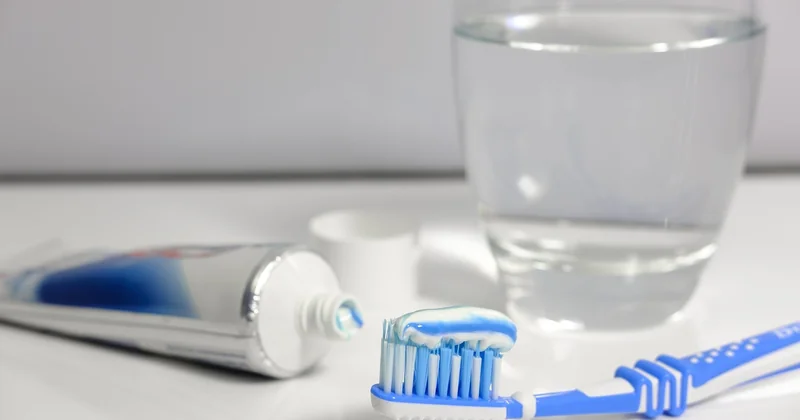
Criteria that actually matter
- Coupling type. Contact-pin chargers idle cleaner than inductive ones. If overnight proximity to your head is your concern, this is the first thing to check.
- Auto cutoff. A base that stops drawing current once the brush is topped up is worth more than any "low EMF" sticker.
- External transformer vs. integrated. A charger with a separate wall brick moves the AC conversion to the outlet, and the puck on your counter runs at low voltage. I prefer this—it's also easier to replace.
- Certification. CE, FCC, or UL marks confirm electrical safety, not field strength. Still non-negotiable.
- Physical footprint. A smaller base means less coil, and it's easier to place away from where you sleep.
A quick comparison
| Charger type | Field while idle | Overnight suitability | Notes |
|---|---|---|---|
| Inductive puck | Persistent small field | Fine if kept off the nightstand | Most common design |
| Contact-pin base | Near zero when charged | Better for bedside use | Pins need occasional cleaning |
| USB travel charger | Depends on the wall adapter | Not for continuous use | Small coil, short cable |
Can you put a normal plug on a toothbrush charger?
Usually not safely, and I'd advise against improvising. Toothbrush chargers are designed for a specific low-voltage input from their own adapter—the base expects a particular AC or DC voltage and current, and swapping in a generic plug risks overvoltage, overheating, or a charger that simply doesn't work.
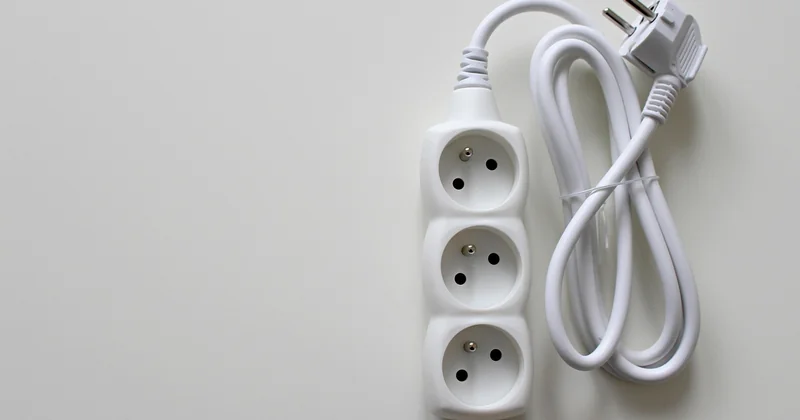
What you can do: replace a lost adapter with one that matches the original's voltage and current ratings exactly, and check the polarity if it's a DC barrel connector. Cutting the molded plug off and splicing a generic one on voids the certification and the warranty, and it removes the safety margin the manufacturer built in. Not worth the five dollars you'd save.
Does my Oral-B electric toothbrush have a lithium battery?
It depends on the model. Most modern rechargeable Oral-B handles use either nickel-metal hydride (NiMH) or lithium-ion cells, and the type varies across product lines and generations. The fastest way to know is to check the model number on the base of the handle and look up the spec sheet—Oral-B publishes the battery chemistry per model.
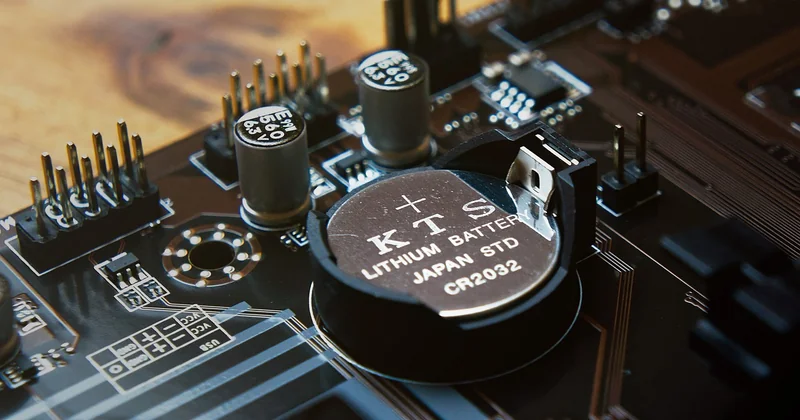
Why it matters for EMF: lithium cells charge faster and, in some designs, the charger cuts off more cleanly once full. NiMH handles often trickle-charge for longer, which means the inductive field can be present for more of the night. Neither is a hazard, but if you're minimizing exposure, a lithium model with a smart cutoff is the better pairing.
Should you leave your electric toothbrush on the charger all the time?
For battery health, yes—that's what the design expects, and modern handles manage their own charge cycles. For EMF minimization, no—or at least not on your nightstand. The field is small but continuous while the brush rests on the base.
My habit: the brush charges on the bathroom shelf during the day, comes off at night. I get a full brush every morning and the base isn't emitting anything within a few feet of where I sleep. That single change did more than any "EMF-safe" label ever could.
Practical rules that beat any label
If you take nothing else from this: distance is the design. Move the charger six inches from where you stand or sleep and you've done more than a spec sheet can. Then check that the charger cuts off when the brush is full, that it carries a proper safety mark, and that the adapter matches the original.
The rest is noise—literally and figuratively.


