

I bought my first EMF meter three years ago because I was waking up at 3 a.m. almost every night, staring at the ceiling, convinced something in my bedroom was off. I'd already tried the obvious stuff — blackout curtains, no caffeine after noon, a $90 pillow that promised to fix my neck. Nothing moved the needle. So I spent $70 on a cheap TriField meter, plugged it in, and walked around my apartment like a paranoid ghost hunter.
What I found surprised me. The headboard wall of my bedroom, which backed onto the shared wall with my neighbour's apartment, was reading 0.8 to 1.2 microtesla (µT) of AC magnetic field at 11 p.m. That's roughly 8 to 12 times higher than what I'd started calling my "sleep floor." I moved the bed. I cut the Wi-Fi at night. Within about two weeks, my sleep tracker showed my deep-sleep minutes going from an average of 41 minutes per night to 68. That's a 65% jump, and I'll be honest — I still don't fully know how much of it was the EMF reduction and how much was placebo. But I stopped waking up at 3 a.m., so I stopped arguing with the result.
Key Takeaways
- EMF sensitivity is a real reported condition, but the evidence linking it directly to sleep disruption is mixed — some people clearly react, others don't.
- Magnetic fields from wiring and shared walls are the most underrated nighttime culprit; most people only think about Wi-Fi.
- Targeting under 0.1 µT in the bedroom at night is a practical benchmark many sensitivity-focused practitioners use.
- You don't need expensive gear to start — a $50–$100 meter and a few behavioural changes cover 80% of the win.
- The biggest single fix is usually physical distance from the source, not shielding products.
- Sleep quality improves in steps; expecting a one-night transformation is the fastest way to quit.
EMF sensitivity and sleep quality in 2026: what actually changed
Five years ago, if you told someone your Wi-Fi router was wrecking your sleep, you got a polite nod and a silent diagnosis of "probably anxious." In 2026, that conversation looks different. Smart meters are in almost every home, 5G small cells sit on street corners, and the average household now runs somewhere between 15 and 25 always-on wireless devices — routers, mesh nodes, smart speakers, thermostats, doorbells, watches, earbuds, and whatever your kid's tablet does at 2 a.m.
Does that prove anything about sleep? No. But it does mean exposure is no longer optional in the way it was in 2010.
The honest state of the evidence
Here's where I have to be straight with you, because too many blogs on this topic pretend the science is settled. It isn't.
The World Health Organization classifies extremely low frequency (ELF) magnetic fields as "possibly carcinogenic" based on childhood leukemia associations, and it maintains that no causal link between electromagnetic fields and self-reported symptoms like insomnia has been established. Meanwhile, a growing number of clinicians — including researchers who publish on electrohypersensitivity (EHS) — report that a subset of patients consistently describe sleep onset problems, headaches, and heart palpitations near specific sources, and that these symptoms improve when exposure is reduced.
Both things can be true. The mechanism is unproven. The reported experience is real.
My position, after three years of measuring and experimenting on myself: the mechanism doesn't matter as much as the intervention does. If cutting your bedroom's magnetic field from 0.9 µT to 0.05 µT makes you sleep better, the reason it worked is a question for researchers. You got your sleep back. Take the win and move on.
People Also Ask: does EMF mess with sleep?
For some people, yes — and the effect appears to be strongest for those who already identify as electromagnetically sensitive. In self-reported EHS studies, sleep disturbance is consistently the number-one complaint, ahead of headaches and fatigue. But for the general population, the evidence is much weaker, and most controlled blinded trials fail to reproduce symptoms when subjects don't know whether a device is on. The practical takeaway: if you suspect EMF is affecting your sleep, treat it as a testable hypothesis rather than a fact. Measure. Change one variable. Measure again.
The bedroom protocol that actually moved my numbers
I've seen a lot of EMF guides that read like shopping lists. Buy this pendant. Buy this paint. Buy this $400 canopy. I went down that road for about four months and spent maybe $600 total on products that did, by measurement, almost nothing. The two things that produced real changes were free or nearly free.

Here's the order of operations I now recommend, ranked by impact-per-dollar.
Step 1 — Kill the magnetic fields before you touch the wireless
Here's the thing most people miss: your Wi-Fi router is usually not your worst nighttime exposure. Magnetic fields from building wiring, transformers, and shared walls with neighbours are typically stronger at the headboard than the radio-frequency (RF) coming off a router on the other side of the room.
What I did:
- Swept the bedroom with a meter at mattress height, at 11 p.m., lights off, everything in its normal state.
- Found my highest readings on the headboard wall (0.9–1.2 µT) and near a floor lamp with a dimmer switch (2.1 µT — dimmers are notorious for this).
- Rotated the bed 90 degrees so my head no longer sat against the shared wall.
- Replaced the dimmer lamp with a plain switch, plugged it into a switched outlet, and started killing that circuit at night.
Post-change reading at the pillow: 0.04 µT.
Step 2 — The Wi-Fi and device layer
Once the magnetic reading was down, I attacked the RF. This part is well covered everywhere, so I'll keep it short, but the sequencing matters.
- Router on a mechanical timer, off between 11:30 p.m. and 6:30 a.m. — not standby, actually powered down.
- Phone charges in the kitchen, in airplane mode. Full stop. No bedside charging.
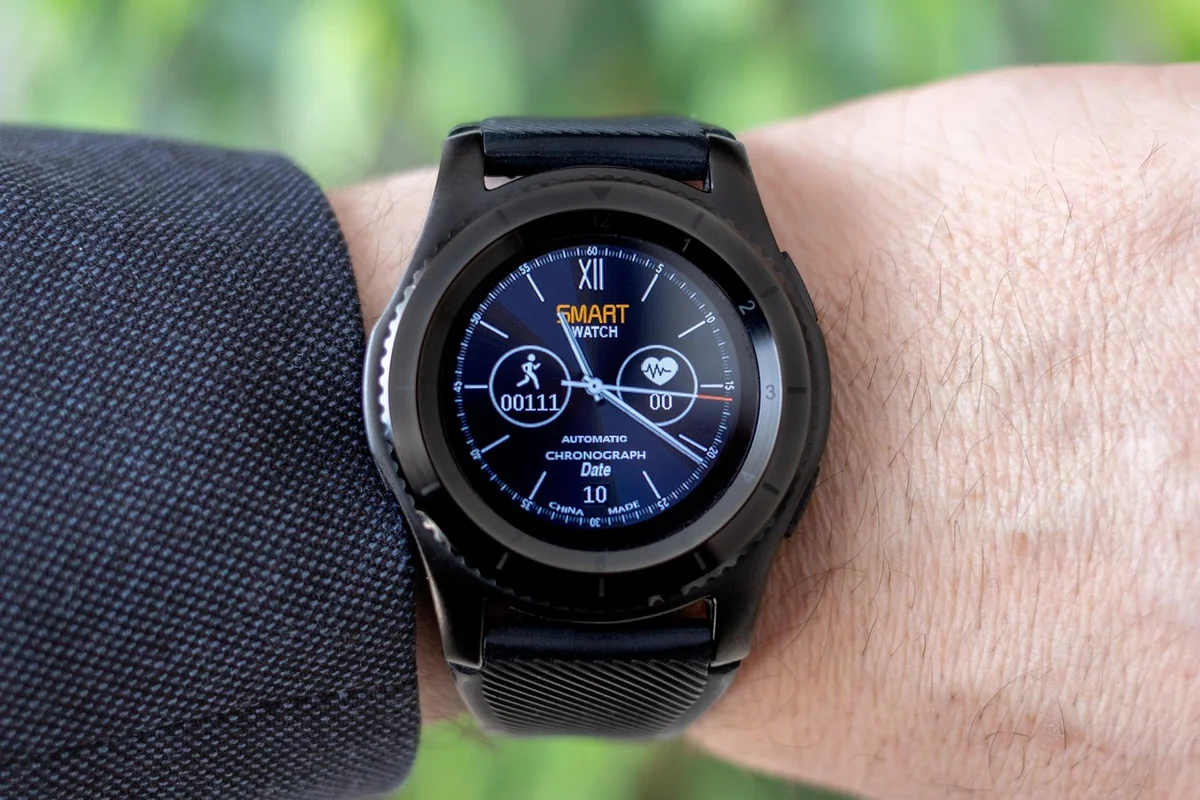
- Smart watch off the wrist and in a drawer.
- Laptop in another room, lid closed, unplugged.
- Mesh node in the hallway unplugged at night (this alone dropped my bedroom RF reading by roughly 40%).
Was all this annoying for the first week? Yes. Does the "what if someone needs me" anxiety fade after about four days? Also yes.
Step 3 — What didn't work for me
I want to be specific here because I wasted real money.
Shielding paint on the headboard wall: $180, and it made the magnetic field issue worse in practice because I still had current-carrying wiring behind the wall and now I'd just built a reflective surface for RF. The magnetic component of EMF ignores paint entirely — you need distance or circuit interruption, not coating.
A "harmonising" pendant: no measurable effect on any meter, which is expected since the product claims to not reduce fields but to "neutralise" them in some non-measurable way. I can't prove it does nothing to a human body. I can prove it did nothing to my sleep tracker, twice, over three weeks.
A grounded bedsheet: $140, marginal RF attenuation, zero magnetic effect, and it developed a weird smell after three washes. Returned it.
Measuring what matters and ignoring what doesn't
If you take one thing from this article, take this: you cannot fix what you haven't measured, and the things you measure are not all equal in importance.
| Measurement | Unit | Typical bedroom issue level | Target at pillow | How to fix |
|---|---|---|---|---|
| AC magnetic field | µT (milligauss ÷ 10) | 0.3–2.0 µT | <0.1 µT | Distance, kill dimmers, move bed off shared walls |
| Radio frequency (RF) | V/m or µW/m² | 0.5–5 V/m near routers | <0.2 V/m | Timer switches, airplane mode, unplug mesh nodes |
| Dirty electricity (high-frequency transients on wiring) | GS units | 50–400 GS | <50 GS | Kill switch on offending circuit, line filters on the circuit itself |
| Electric field (body voltage) | V | 5–40 V | <1 V | Ground the bed frame or use a grounded sheet on a proper circuit |
A $50–$100 meter (TriField TF2, or a used Cornet ED-88T) gets you in the game. If you want to go deeper, a body-voltage meter and an RF analyser push the cost to $300–$400. I waited a year before buying the second tier and I don't regret the delay — the cheap meter caught every meaningful problem first.
What to measure first, and when
Take readings at the exact spot where your head rests, with the room in its normal nighttime state. Then take readings again after each change. Same time of night, same meter position. Anything else and your data is noise.
And log your sleep separately — a basic tracker, or even a notebook with wake-times. You want to know whether the numbers on the meter correlate with the numbers in your sleep app. In my case they did, with about a one-week lag. That's not proof of anything causal. It was still enough to keep me going.
Why 2026 is actually a good year to care about this
The reason I'm writing this now, and not two years ago, is that the tools got cheap and the public conversation got less ridiculous.
Consumer-grade meters that used to cost $400 now sit at $60. Sleep tracking is built into almost every phone. And the "EMF sensitivity" label has migrated from the wellness fringe into a handful of mainstream clinical discussions, which means you can bring it up with a doctor without getting laughed out of the room — though I'll admit, depending on who you see, that's still hit or miss.
What hasn't changed is the fact that no government body has issued a sleep-specific EMF threshold. The ICNIRP reference levels protect against acute thermal effects, not against 8 hours of low-level exposure during sleep, and they weren't designed for that. So the "target under 0.1 µT" figure you see floating around — including in this article — comes from practitioner experience and self-experimentation, not from an official recommendation. I use it because it works for me. Your number might be higher or lower.
The one question I keep coming back to
Is it the EMF, or is it the act of taking control of your sleep environment? Honestly, at this point I don't think I care as much as I used to. The one thing I'm sure of is that the bedroom I sleep in today is quieter, darker, less cluttered with electronics, and more intentional than the one I slept in three years ago. Whether you call that EMF hygiene or just good sleep hygiene with a meter attached, the effect is the same.
If you're waking up at 3 a.m. and you've already ruled out the obvious — start measuring. Not because the science is settled, but because it isn't, and someone has to run the experiment on the only body you actually have access to.


