

I still remember standing in my first apartment with a cheap $40 "EMF meter" I'd bought off a sketchy website, waving it around like a divining rod. The needle jumped near my fridge, screamed at my breaker panel, and went completely silent in the bedroom. I concluded the bedroom was safe. I was wrong — and it took me almost two years and one very awkward conversation with a certified building biologist to figure out why.
Testing EMF levels in an apartment building is genuinely harder than testing a house. You don't control the wiring, you share walls with strangers, and the biggest sources of electromagnetic fields might be originating three floors below you in a transformer room you've never seen. But it's absolutely doable yourself, if you know what you're actually measuring and where the invisible offenders hide.
Key Takeaways
- You're dealing with three separate things: AC magnetic fields, AC electric fields, and RF (radiofrequency) radiation. One meter rarely covers all three well.
- Magnetic fields pass through walls almost unimpeded. Electric fields are mostly blocked by building materials. RF sits somewhere in between and depends heavily on frequency.
- Cheap meters lie. A $40 device will give you directional hints at best, not numbers you can trust.
- The most useful measurement in an apartment is a 24-hour logging session, not a five-minute walk-around.
- Shared infrastructure — risers, meter banks, rooftop antennas, basement transformers — is usually the real story, not your own appliances.
How to test EMF levels in an apartment building: what you're actually measuring
Before you buy anything, get this straight, because I wasted months conflating these.
AC magnetic fields come from current flowing through wires. They're measured in microtesla (µT) or milligauss (mG). This is the field that keeps people up at night, and it's the one that penetrates walls, floors, and ceilings without caring much. The World Health Organization and the ICNIRP set a general public reference level at 100 µT (1,000 mG) for power-frequency magnetic fields — but that's a "don't get electrocuted" threshold, not a health-based one. Building Biology guidelines (the SBM-2015 standard) are far stricter, flagging anything above 0.2 µT (2 mG) in sleeping areas as a concern worth addressing.
AC electric fields come from voltage, not current. They're measured in volts per meter (V/m). Here's the good news: drywall, plaster, and even a decent coat of paint knock these down considerably. The annoying part is that unshielded wiring inside your own walls radiates them into the room even when nothing is switched on.
RF radiation is your Wi-Fi, cell towers, cordless phones, smart meters, and every neighbor's router bleeding through the floor. Measured in microwatts per square meter (µW/m²) or volts per meter. Building Biology's "no concern" threshold for sleeping areas is under 0.1 µW/m² — a number that sounds absurdly low until you realize a single Wi-Fi router at three meters is already doing 100x that.
Why apartments are a different beast
In a detached house, you trace a problem to its source and fix it. In an apartment, the source is often somebody else's property. I once measured 1.8 µT in the middle of a client's living room in a Lisbon building — turned out the building's main electrical riser ran vertically through the wall shared with the corridor. Nothing in her unit was responsible. Nothing she could legally touch.
How can I check my EMF levels?
You check them with three separate instruments (or one good multi-function meter), in a specific order, ideally over more than one time of day. A five-minute sweep tells you almost nothing, because apartment EMF loads are heavily time-dependent — neighbors' usage, elevator motors, HVAC cycling, and evening Wi-Fi congestion all shift the numbers.
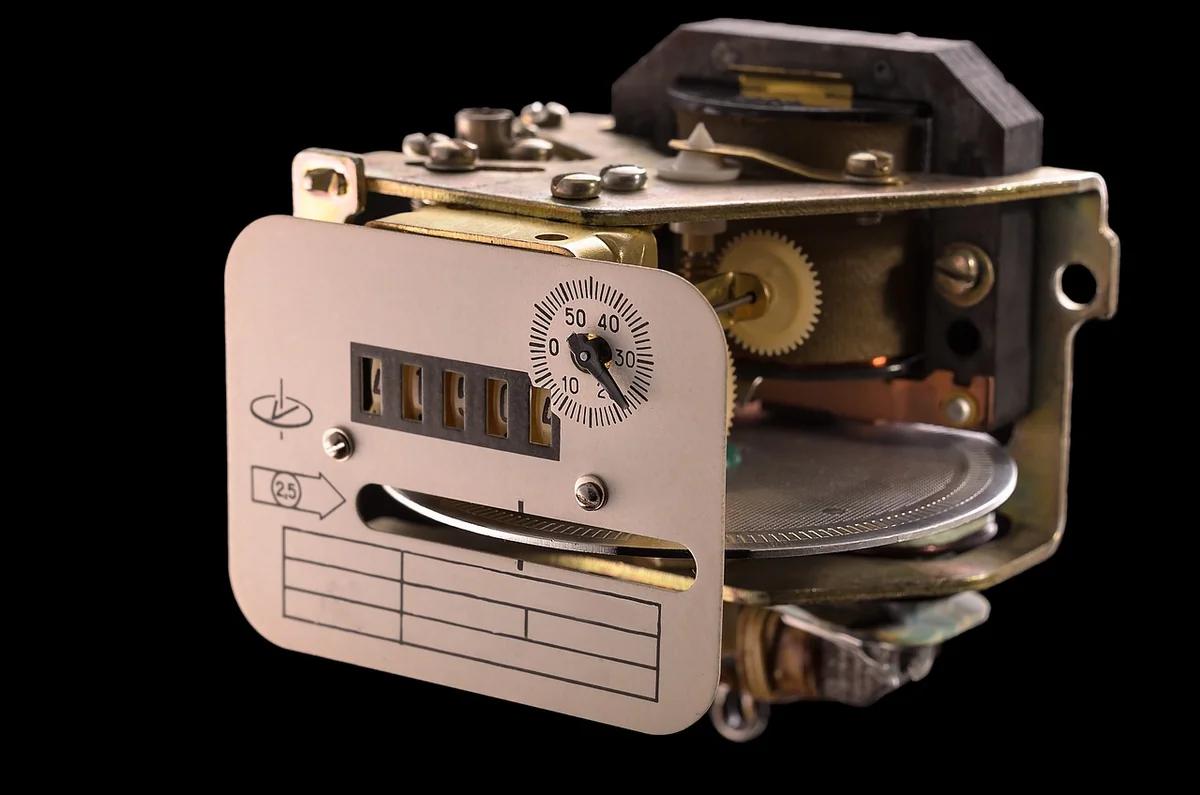
The instruments that actually work
- A gaussmeter for AC magnetic fields — a single-axis meter is cheap but you have to rotate it to find the peak; a triple-axis meter (like the ones from Extech or the higher-end Gigahertz Solutions) reads the true resultant field in one go.
- An electric field meter — separate device, often a body-voltage or capacitively-coupled type. These are the ones most people skip, and it's a mistake.
- An RF meter with frequency response up to at least 8 GHz — the cheap "ghost hunter" style meters are useless. You want something that logs and shows peak vs. average.
My honest advice: if you're going to spend money, spend it on the RF meter. Magnetic field meters are relatively cheap and accurate; RF meters are where garbage products cluster. I've tested three sub-$100 RF meters and only one gave readings that matched my reference instrument within 30%. The other two were off by a factor of five to ten.
A simple measurement protocol
- Start at the breaker panel and work outward. This is your baseline — if the panel itself is radiating strongly, the problem is upstream and shared.
- Walk the apartment at 1 meter height first for a general map, then again at 0.1 meters from each wall to catch riser and shared-wall contributions.
- Measure your sleeping position specifically: pillow height, both sides of the bed, and the floor if you have a downstairs neighbor.
- Repeat at three times: mid-morning, early evening, and after 11 p.m. The night reading is the one that matters most.
- Note every reading with its location and time. A phone photo of the meter display plus a written location tag is fine.
Here's the thing most guides skip: turn your own breakers off one by one while measuring. If the magnetic field in your bedroom doesn't drop, the source isn't yours. That single test saved me from a $2,000 "remediation" quote that would have rewired the wrong circuit entirely.
Does EMF pass through walls?
Yes — but not all EMF equally, and this is where almost every article online gets lazy.

Power-frequency magnetic fields pass through standard drywall, brick, concrete, and even reinforced concrete with barely any attenuation. A 1 µT field on one side of a wall is still roughly 1 µT on the other side. If your neighbor has a faulty appliance or a subpanel right against the shared wall, you're getting the full dose, and there is no material shortcut around this — only distance and source removal work.
Power-frequency electric fields are a different story. Most building materials attenuate them significantly. Drywall cuts them substantially; a grounded metal mesh, foil-backed insulation, or specialized shielding paint can knock them down by 90%+. So if your electric field readings are high in an apartment, the source is almost always inside your own unit — your own wiring, ungrounded outlets, or a bedside lamp cord.
RF radiation is frequency-dependent. Lower frequencies (cell towers at 700–900 MHz) penetrate walls quite well. Higher frequencies (5 GHz Wi-Fi) get hammered by obstacles. A neighbor's 2.4 GHz router two floors away will still register in your bedroom; the same router on 5 GHz might not.
Quick reference by field type
| Field type | Penetrates walls? | Typical apartment source | Building Biology target |
|---|---|---|---|
| AC magnetic (ELF) | Almost fully | Risers, subpanels, neighbors' appliances | < 0.2 µT sleeping area |
| AC electric (ELF) | Mostly blocked by drywall, well by shielding | Own wiring, ungrounded circuits | < 5 V/m sleeping area |
| RF (2.4/5 GHz, cellular) | Partially, frequency-dependent | Neighbors' Wi-Fi, rooftop antennas, smart meters | < 0.1 µW/m² sleeping area |
The apartment-specific sources nobody talks about
The generic EMF articles list power lines and microwaves. Cool. Those are rarely the issue in a multi-unit building. Here's what actually shows up in my measurements.

Electrical risers and meter banks. In many buildings, the main vertical distribution runs through a shaft that touches multiple apartments. The fields from these risers extend 1–3 meters into adjacent rooms. I've measured 2.5 µT at 1 meter from a riser wall — twelve times the Building Biology sleeping threshold.
Sub-panels inside units. If your apartment has its own breaker box, measure 1 meter in front of it with the main load running. A heavily loaded panel can put out 3–8 µT at the face. Your couch is probably not there, but your kid's bed might be.
Smart meters and communicating meters. These broadcast intermittently, mostly in bursts. A spot reading might show nothing; a 24-hour RF log will show spikes every few minutes. Whether those spikes matter is scientifically contested, but you should at least know they're happening near your bedroom wall.
Rooftop antennas and basement transformers. Both radiate into the whole building. If you're on the top floor and there's a cell antenna cluster on the roof, or on the ground floor above a transformer vault, get a professional RF survey — this is beyond DIY.
When to call a professional
DIY tells you whether there's a problem. A certified building biologist tells you where it's coming from and what will actually fix it. The International Institute for Building-Biology & Ecology maintains a directory of certified consultants. Typical apartment survey: 2–3 hours, and in my experience you should expect to pay somewhere between $300 and $800 depending on region and complexity.
My rule: if your own measurements show > 0.4 µT magnetic or > 1 V/m electric in the bedroom, or > 1 µW/m² RF, it's worth a professional eval. Below that, you can usually address things yourself.
Practical fixes that actually move the needle
Once you've measured, what do you do? Ranked by effort-to-effect ratio, based on what I've seen work in real apartments.
- Distance. Magnetic fields fall off roughly with the square of distance. Moving your bed 60 cm away from a shared riser wall can cut the reading by 70% or more. Nothing else comes close for cost-effectiveness.
- Source removal or relocation. Move the Wi-Fi router out of the bedroom. Turn off the smart meter's breakers if your utility allows it (many don't, and I get it — but ask).
- Demand switches for bedrooms. A demand switch cuts power to bedroom circuits at night, killing electric fields from wiring. Around $150–$400 installed, and I've seen it drop bedroom electric fields from 40 V/m to under 2 V/m. This is the single best fix for electric fields, in my opinion, and I'll defend that.
- Shielding. RF shielding paint, canopy fabrics, grounded window mesh. Works, but it's expensive, easy to botch, and often masks a source you could just eliminate.
- Talk to your neighbors. Politely. If their subwoofer's power supply is the problem and it's against your shared wall, moving it 50 cm solves everything. I've had this work twice and fail more often — but it costs nothing to try.
What does not work: crystals, "EMF harmonizers," stickers on your phone, and those pendants that supposedly neutralize radiation. I tested three of these with a proper meter. Zero measurable effect. Save your money.
The part that keeps me up at night
Here's the uncomfortable truth I've arrived at after several years of measuring apartments: you can do everything right and still live in a building with problems you can't fix. The riser is where it is. The transformer vault is where it is. The cell antenna on the roof was approved before you moved in.
What you can control is where you put your bed. And honestly, that's not nothing — it's 80% of the practical value of all this measurement. The other 20% is knowing when to walk away from a lease before you sign it. Bring a gaussmeter to your next apartment viewing. Stand in the bedroom for two minutes. You'll learn more in that two minutes than from any article, including this one.
Now go measure something. Just not with the $40 meter.


