Electrosensitivity workplace accommodation letter: what to actually write
The first thing most people get wrong is believing there's an official template. There isn't. I've sat with colleagues trying to file these requests, and the ones that succeeded all shared one trait: they described a body reacting to a specific environment, not a diagnosis fighting for a label.
Electrosensitivity (often written EHS) sits in an awkward legal spot. In most countries it is not classified as a disability, which changes how you frame the letter. You are not claiming a protected status in most jurisdictions. You are describing a functional limitation and proposing workable fixes. That distinction matters more than any phrasing trick, and it's the part almost every online sample skips.
Key takeaways
- Lead with the functional problem (symptoms tied to specific equipment), not the diagnosis.
- Name concrete accommodations: wired Ethernet, a low-exposure desk, moving away from router clusters and electrical panels.
- Say explicitly that you are open to alternatives. This single sentence changes how HR reads the rest.
- Get medical backing, but warn your doctor that EHS is poorly understood. Ask for a functional description, not a contested label.
- Keep the request to one page. Two at most.
- Send it in writing and keep a dated copy. Verbal requests evaporate.
Why a written request beats a corridor conversation
A request made in the hallway has a half-life of about four minutes. I watched a colleague raise her screen-flicker issue three times in passing and get three sympathetic nods. Nothing changed. She finally emailed a two-paragraph version, and the equipment was swapped inside a week. The difference was not the wording. It was the record.
Writing does three things a conversation cannot. It creates a timestamp. It forces you to organize the problem into something another person can act on. And it gives HR a document they can forward upward without having to reconstruct what you said.
What the letter cannot do
It will not force your employer to remove every wireless access point in the building. It will not create a legal obligation where none exists. If EHS has no recognized disability status in your country, you are negotiating, not demanding.
I'll be blunt: anyone telling you a template will override that is selling something. What the letter can do is shift the conversation from "is this real?" to "which of these options works for both of us?" That is a winnable conversation.
How to write a workplace accommodation letter
Structure it like a business memo, not a plea. Four parts, in this order.

- Identification and context. Your name, role, team, and how long you have been there. One or two lines.
- The functional limitation. What you cannot do, or what happens when you try. Symptoms and triggers, in plain language.
- The requested accommodations. Specific and numbered.
- Openness and next steps. State that you welcome alternative solutions and suggest a meeting.
Notice what's missing: no apology, no over-explanation of the underlying condition, no medical essay. HR is not your doctor. They need to know what to change.
Tone calibration
The register that works is factual and slightly understated. Compare:
- Bad: "I suffer terribly from this condition and I'm begging you to help."
- Better: "Fluorescent lighting and the wireless access point above my desk trigger headaches and concentration loss within about 30 minutes."
One is an emotional appeal. The other is a problem statement. Managers respond to the second because it looks like work they already know how to do.
What is an example of a reasonable accommodation request?
Reasonable means proportionate to the employer's cost and disruption. For EHS, the accommodations that tend to pass that test are the ones that don't require rebuilding the office.
| Accommodation | Typical cost to employer | How likely to be approved |
|---|---|---|
| Wired Ethernet connection instead of Wi-Fi | Low (a cable and a port) | High |
| Relocating your desk away from routers, electrical panels, or dense device clusters | Low to moderate | High, if a seat exists |
| Disabling one nearby access point or lowering its output | Low, needs IT sign-off | Moderate |
| Incandescent or full-spectrum task lighting at your station | Low | High |
| Remote work two or three days a week | Low, if your role allows it | Depends entirely on the role |
| Full building-wide Wi-Fi reduction | High, affects everyone | Rare |
See the pattern? The bottom row is what people ask for first and get refused. The top rows are what they should lead with.
I made that mistake myself early on. My opening ask was a complete no-wireless zone, and it went nowhere. When I resubmitted with a wired connection and a desk move as the primary request, with the bigger items listed as future possibilities, it got approved in about ten days.
How to write a request letter for accommodation
Here is a working template. Adapt the bracketed parts. Keep it under a page.

Subject: Accommodation request — [Your name], [role]
Dear [HR contact or manager],
I am writing to request accommodations related to a medical condition that affects me in specific work environments. My doctor has documented the functional limitations described below.
In my current workstation, I experience [symptoms — e.g., headaches, dizziness, difficulty concentrating] when I am near [triggers — e.g., wireless access points, fluorescent fixtures, electrical equipment]. These symptoms typically begin within [timeframe] and improve when I am away from those sources.
I would like to request the following accommodations:
- [Wired network connection at my desk]
- [Relocation to a workstation away from high-density equipment areas]
- [Task lighting to replace overhead fluorescent fixtures]
I understand that some of these may not be feasible, and I am open to discussing alternatives that achieve a similar result. I would welcome the chance to meet and work through the options together.
Thank you for your time.
Sincerely,
[Name]
That's it. Roughly 180 words. Everything longer gets skimmed, and skimmed requests get deferred.
The sentence that does the heavy lifting
The line "I am open to discussing alternatives" is not filler. It signals that you are negotiating in good faith, and it makes refusing your request look unreasonable. HR people deal with adversarial claims all day. A cooperative tone stands out because it's rare.
How do I write an accommodation letter for migraine at work?
Migraine and EHS requests overlap more than people expect, and the same structure works for both. The difference is the trigger list.
For migraine, the environmental triggers are usually lighting, screen glare, and noise. For EHS, they're wireless transmitters, electrical infrastructure, and certain light sources. If you deal with both, list them separately so HR doesn't assume it's one issue.
Migraine has an advantage EHS lacks: it is widely recognized as a serious neurological condition. That recognition means a doctor's letter carries more immediate weight. Leverage it. If your migraines are triggered by the same environmental factors as your electrosensitivity, describe both in the same document. You are requesting one set of changes for two related problems, which is easier to approve than two separate asks.
Getting medical backing when your doctor has never heard of EHS
This is where most requests stall. You ask your GP for a supporting letter, they hesitate because they can't confidently diagnose something contested, and you end up with a vague note that says nothing useful.
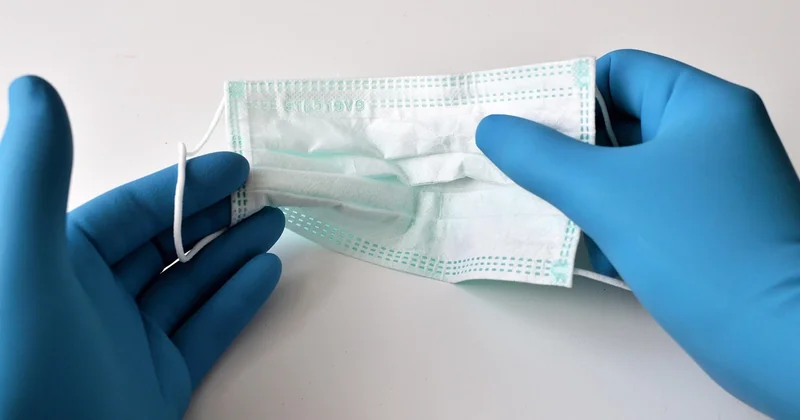
What you want from the doctor is not a diagnosis. It is a description of how your body functions in certain environments, stated as observed fact. Something like: "This patient reports reproducible symptoms in high-electromagnetic environments. Recommending a low-exposure workstation as a precautionary measure."
That phrasing works because it doesn't require the doctor to take a position on a debated diagnosis. It reports what you told them and supports a practical measure. Most physicians will sign that.
If your GP won't, ask about an occupational health referral. Occupational physicians deal with workplace adjustments as routine business, and they're used to writing exactly this kind of letter. That route takes longer but produces a document HR takes seriously.
After you send it
Expect a follow-up meeting. Go in with a ranked list, cheapest and most likely first. Be ready to explain what each accommodation actually solves, because the person across the table may not know what a Wi-Fi access point looks like.
If you get a partial yes, take it. Partial is progress, and a first refusal on a small item is not a final answer. Document what was agreed, in writing, and revisit the rest in a few months once the approved changes are in place.
The harder question is what you do if the answer is a flat no across the board. That's a different conversation, and it starts with understanding what your local labor rules actually require. Worth finding out before you need it, not after.